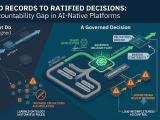
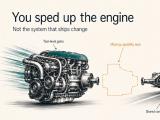
AI collapsed the cost of producing code. It did nothing to the cost of agreeing what the code should be derived from. Cheap building raised the value of expensive alignment, not the other way around.
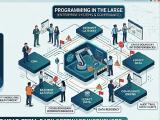
The dark software factory is further off than the noise suggests. A workshop is one bounded bench AI can already run unattended; a factory is governance across owners that no model yet holds.
Tools compound linearly with seats. Substrates compound with the agents built on them. That is the structural difference between an AI programme and an AI transformation.
Context maturity turned out to be the governing variable for code estates. It may be the governing variable for every enterprise value stream where AI accelerates change.
The SDLC isn’t dying, it’s migrating from documents into the execution engine. Most organisations stall at machine-speed delivery under human-speed governance. The missing piece is a function nobody is staffed to own: interpretation binding.
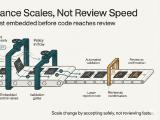
The emerging consensus is to delegate execution to AI and review the output. But review is inspection, and inspection scales with volume. The constraint is the operating model.